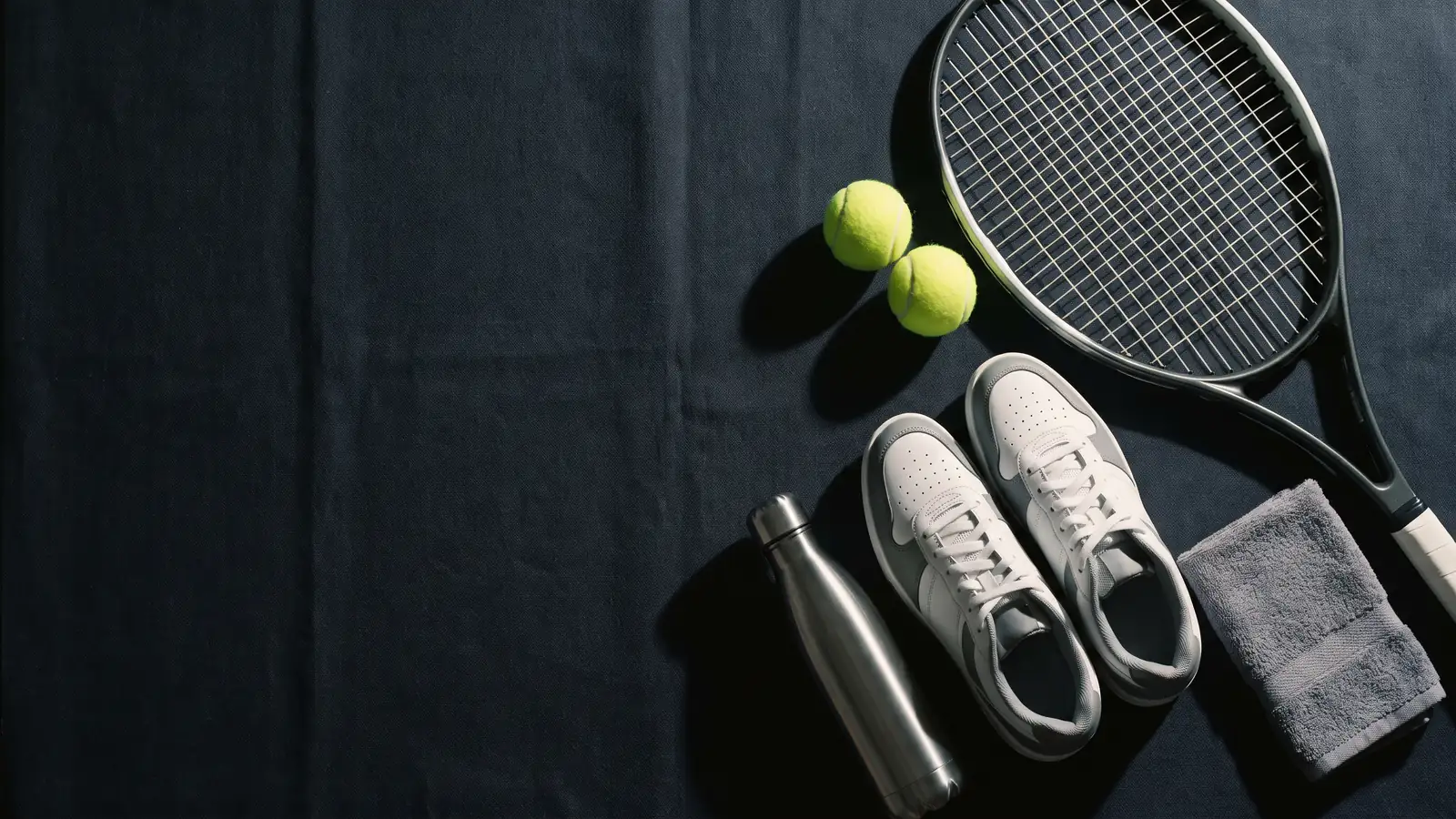
The short answer: court shoes, ordinary gym clothes and a bottle of water. Everything else is either lent at the desk or something you should not buy yet. Here is the longer answer, including the one item that genuinely matters and the several that do not.
People overthink this, and I understand why. Tennis has an image built out of Wimbledon whites and country clubs, and if your only reference is television it is reasonable to assume there is a dress code and a kit list. There is not. What there is, is one piece of equipment that affects your safety, and a lot of things that can wait.
If you read nothing else, read this part.
Do not play tennis in running shoes. This is not a preference and it is not upselling. Running shoes are engineered for a single motion: heel strike, roll forward, push off. To do that well they are built soft, narrow and high in the heel. That construction is actively wrong for tennis, which is a sideways sport. The first time you push hard laterally to reach a wide ball, a running shoe lets your foot roll over its own edge. That is how ankles get turned, and it is the most common preventable injury we see in new players.
Tennis shoes solve it in three ways:
You do not need an expensive pair. Anything from around $60 from a proper tennis brand will do the job for a beginner, and they last a long time indoors. If you already own volleyball, squash or basketball shoes, those are far closer to right than runners — bring them and we will tell you if they are fine.
Check the sole is non-marking. Almost all court shoes are; some cheap gym trainers are not, and dark scuffs on an indoor hard court are permanent and unpopular. If in doubt, ask at the desk before you go on.
Whatever you would wear to a gym. Shorts, leggings, a t-shirt, a sports top. Nothing on the list below is required at South Regency:
Two practical notes. Pockets are useful — you will be holding a second ball while you serve, and it lives in a pocket or under a leg band. And a light layer is worth having for indoor mornings: the building is climate controlled, but you will be cold for the first ten minutes and warm for the rest.
| Item | Why |
|---|---|
| Water | An hour indoors dehydrates you more than you expect. There is a fountain, but bring a bottle. |
| A small towel | Sweaty hands lose the racquet. This is the most underrated item on the list. |
| Hair tie | If relevant. Obvious, forgotten weekly. |
| A spare shirt | If you are going somewhere afterwards. |
| Sunscreen and a hat | Outdoor courts only, May through October. |
That is the entire list. No wristbands, no overgrips, no vibration dampener, no ball hopper.
We lend racquets at the desk, free, and we would genuinely rather you used one for your first month.
Racquets differ in head size, weight, balance point, stiffness, string pattern and grip size, and none of those words mean anything until you have hit a few thousand balls. Buying before then means buying on price or looks, and the most common outcome is a beginner playing with a heavy, stiff, small-headed racquet designed for an advanced player, wondering why their arm hurts and their shots have no power.
After a month, ask a pro. They will hand you three demos across a session, you will feel the difference immediately, and you will spend your money once. Grip size in particular is something you can only judge with a racquet in your hand and somebody checking it — too small is the standard beginner mistake and it is a genuine contributor to tennis elbow.
The one racquet-adjacent thing worth buying early is an overgrip, which costs about three dollars and makes a borrowed racquet feel like yours.
Ten minutes. Not five, not thirty.
Ten minutes lets you park, find the desk, borrow a racquet, put your bag down, get your shoes on and walk onto court without being flustered. If you are booked for a private lesson rather than a clinic, arrive a few minutes earlier still and warm up gently — a pro learns a lot watching you hit before the lesson has technically started, and you get more out of the hour.
What to say at the desk: “It’s my first time, I’m here for the seven o’clock clinic, and I need a racquet.” That is it. They will do the rest, and they hear it several times a week.
The list is shorter, not longer.
Court shoes matter more for children than adults because they are still learning to stop and turn, and children's court shoes are inexpensive. Beyond that: water, a snack for afterwards, and clothes they can move in. We supply age-appropriate racquets and low-compression balls for every junior tier, so there is nothing to buy before a first session — and please do not buy a full-size racquet for a six-year-old, which is the single most common parental mistake in junior tennis.
Two things that help more than any equipment. Feed them beforehand, because a hungry seven-year-old is a short session. And sit far enough back that they cannot hear you, which is the hardest piece of advice any tennis parent ever receives.
You will be nervous. Everybody is, and nobody watching has any interest in how you play — they are entirely occupied with how badly they are hitting their own backhand.
The first ten minutes of most clinics are mini-tennis inside the service boxes, which is deliberately gentle and gets a racquet moving in your hand before anything else happens. Then a coach will show you one thing and feed you balls. Then you will play. Then it will be over and you will be surprised at how quickly the hour went.
We lend racquets and pickleball paddles at the desk, and the indoor courts are climate controlled year-round, so nothing about the weather changes your plans. Turn up ten minutes early and tell the desk it is your first time.
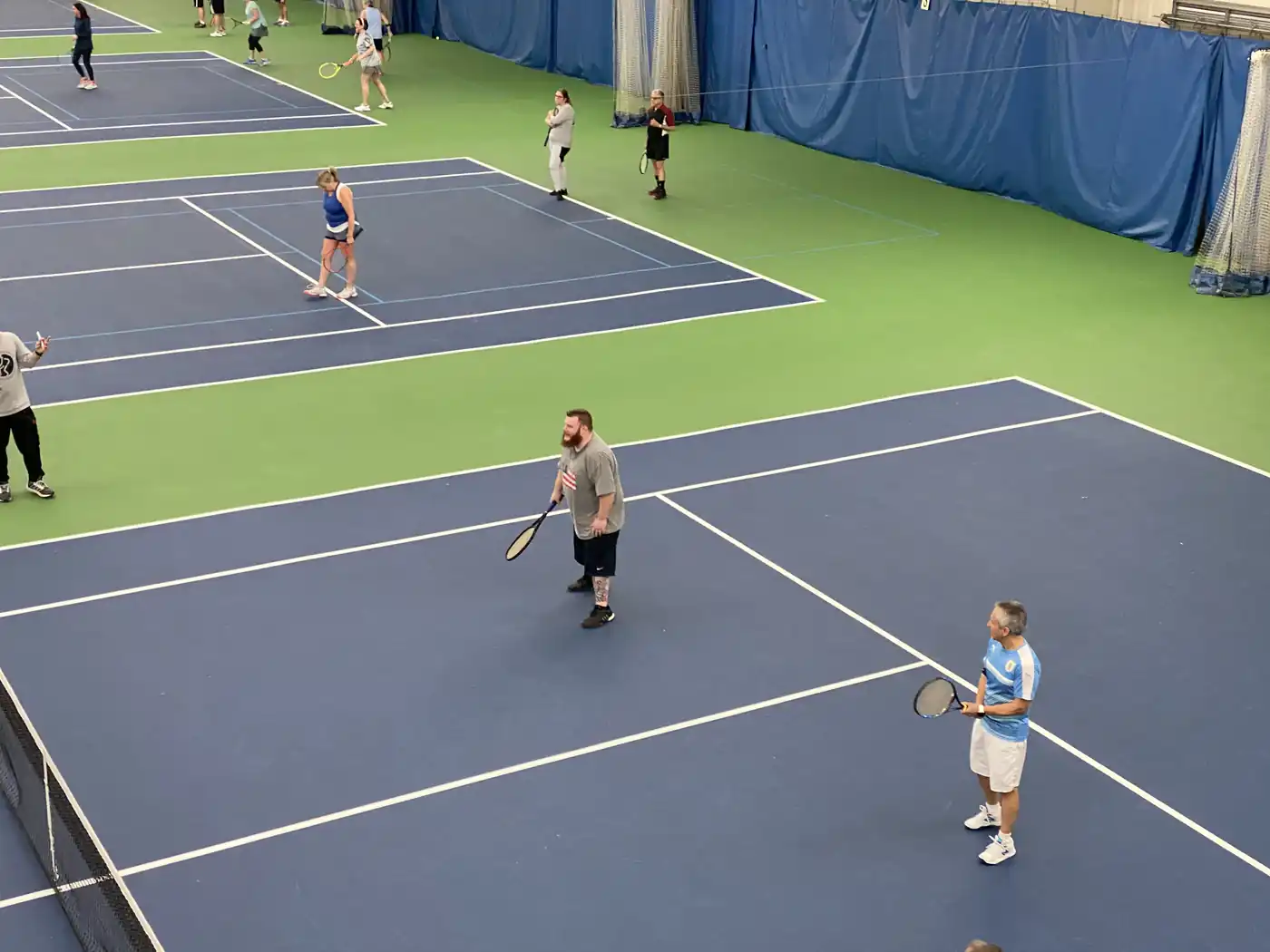
No partner, no racquet, no need to get fit first. What actually happens when an adult who has never played walks into a beginner clinic, and what the first six weeks really look like.
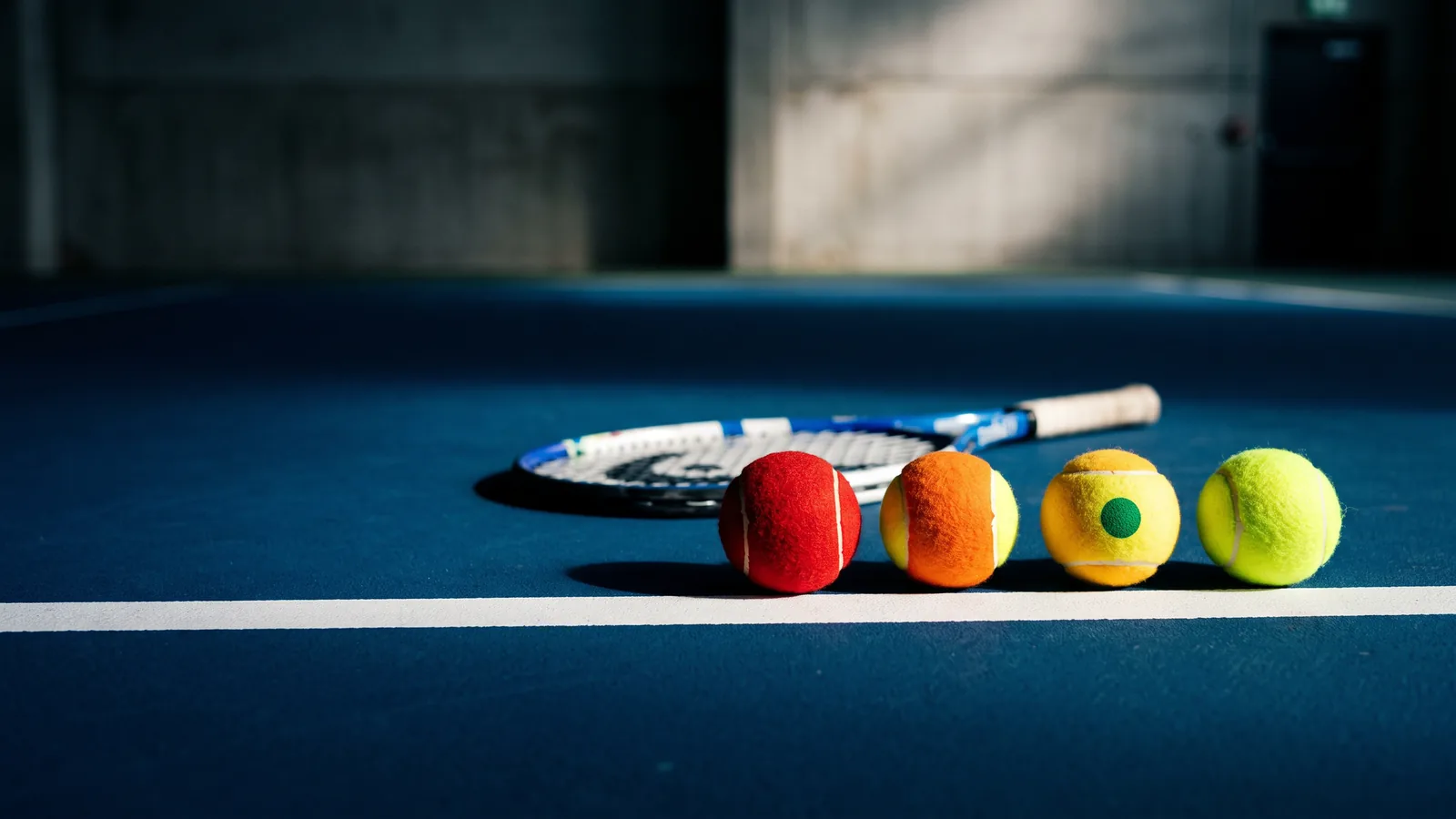
Three is not too young and eleven is not too late. What matters far more is the size of the ball, the size of the court, and whether anybody has made it feel like a test.