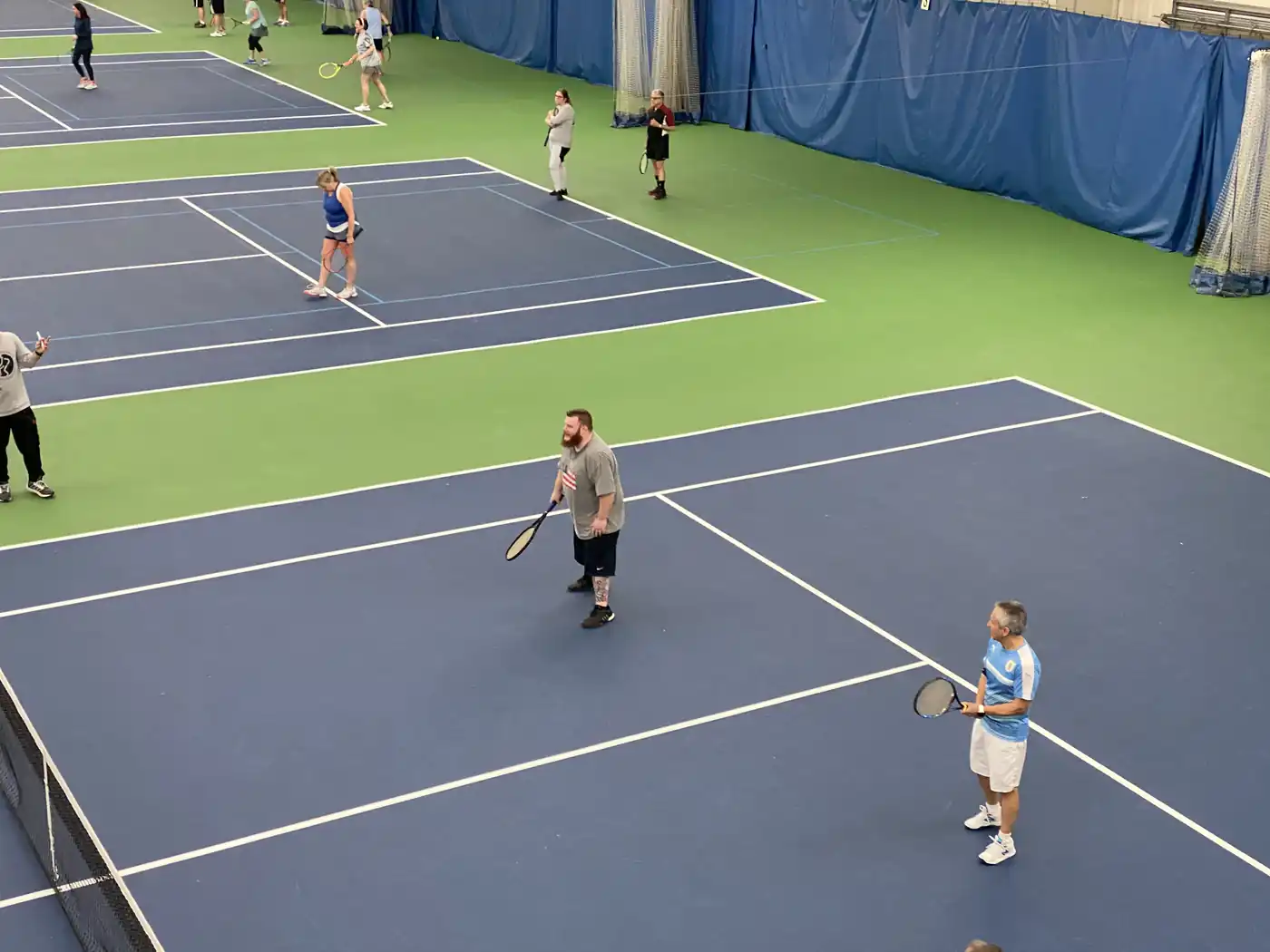
You do not need a partner, you do not need a racquet, and you do not need to get fit first. Here is what genuinely happens when an adult who has never played walks into a beginner clinic — and what the first six weeks actually look like.
I teach the Monday night Adult Beginner clinic. Every week, somebody arrives who has been thinking about it for two years.
They almost always say a version of the same sentence at the door: “I should tell you, I’m going to be terrible.” And then eight other people in the group say hello, and it turns out three of them said exactly the same thing on their first Monday, and inside twenty minutes everybody is rallying badly and enjoying it enormously.
Tennis has a reputation problem with adult beginners. It looks like a sport with a gate on it — the whites, the scoring, the etiquette, the sense that everyone else learned this at eleven and you missed the window. Almost none of that is true, and the parts that are true do not matter. Let me take the objections one at a time, because they are the same four every time.
“I don’t have anyone to play with.” Nearly nobody arrives with a partner. That is the entire point of a coached clinic: a pro runs the session and pairs everyone up on the day. You do not need to know a soul. It is genuinely one of the easiest ways to meet people in a new town, which is why a surprising number of our adult beginners are people who moved here for work.
“I’m not fit enough yet.” This one is backwards. Beginner tennis is not a cardio event — you spend most of a first session standing still, learning where your racquet face needs to point. The running comes later, gradually, and by then you will be fitter because you have been playing tennis twice a week for three months. Nobody has ever got fit first and then started. That plan has a zero percent completion rate.
“I don’t own a racquet.” We lend them at the desk. Please do not buy one yet — more on that below.
“I’m too old.” The average age in my Monday clinic is somewhere in the forties. We have players who started at 58 and now play doubles three times a week, and we have a Coed Senior Doubles group that plays Monday and Friday mornings and takes the game extremely seriously. Tennis is one of very few sports you can genuinely begin in middle age and still be playing at eighty. The physiology is on your side: it is low-impact, it is intermittent rather than sustained, and doubles halves the court you have to cover.
Turn up twice a week, not once. Twice a week is the difference between building a stroke and re-learning one every session. It is the single strongest predictor of whether somebody is still playing a year later — stronger than age, fitness, or any athletic background.
Here is the honest sequence, minute by minute, because knowing it removes about eighty percent of the nerves.
You arrive ten minutes early and tell the desk it is your first time. Somebody hands you a racquet and points you at the right court. That is the whole check-in.
The first ten minutes are mini-tennis. Everyone stands inside the service boxes and taps the ball back and forth softly. It is deliberately unathletic. It gets you touching the ball immediately rather than standing in a line watching, and it hides the difference between the person on week one and the person on week nine.
Then you learn one thing. Not five. One. Usually the forehand, and usually just where to make contact — out in front, at about waist height, not next to your hip. A coach feeds you thirty balls. Some go in the net. Some go into the next county. Around ball eighteen, two or three land in the court, and something in your brain lights up.
Then you play. Cooperative rallies first, then simple points. You will lose most of them and it will not matter, because so will everybody else.
And then it is over. One hour. Nobody made you run laps, nobody made you keep score properly, and nobody cared that your serve went sideways.
Adults improve faster than they expect at the start and slower than they expect in the middle. Here is roughly how it goes if you come twice a week.
| Weeks | What changes |
|---|---|
| 1–2 | You can make contact reliably. Forehands go forward. You are exhausted by the concentration, not the running. |
| 3–4 | Short rallies start happening — four, five, six balls. The backhand appears and is immediately your least favourite thing. |
| 5–6 | You can serve well enough to start a point. You begin to see where the ball is going before it gets there, which is the actual skill of tennis. |
| 3–6 months | You are playing real points, you know the scoring, and you have a couple of people whose numbers you have. This is where it becomes a sport you play rather than a class you attend. |
The plateau at around month four is normal and it catches everybody. Your strokes are decent, your results stop improving, and it feels like you have stalled. You have not — you have just moved from learning strokes to learning tactics, and tactics improve invisibly for a while before they show up on the scoreboard.
Buy court shoes. That is the whole list.
This is not upselling — it is the one genuine safety item. Running shoes are built to roll forward and are deliberately soft and high in the heel. Tennis is a lateral sport, and a running shoe under a hard sideways push is how ankles get turned. Tennis shoes have a flatter, wider base and a herringbone tread designed for sliding to a stop. Anything from around $60 does the job. You do not need the pro model.
Do not buy a racquet for at least a month. Borrow ours. Racquets vary by head size, weight, balance and stiffness, and none of those words will mean anything to you until you have hit a few thousand balls. When you are ready, a pro can hand you three demos and you will feel the difference immediately — and you will buy the right one instead of the one that was on sale.
Wear whatever you would wear to the gym. Nobody at this club has ever mentioned another adult's clothes. Bring water. That is the kit.
Start with a clinic. Almost always.
A private lesson is a superb tool for fixing a specific thing, and a slightly wasteful way to learn the game from zero — you get an hour of undivided attention when what you actually need is repetition, other people to hit with, and the low-stakes experience of missing in company. Clinics also cost a fraction as much, which matters when you are still deciding whether you like the sport.
The sensible pattern: clinic twice a week for a couple of months, then one private lesson to iron out whatever is bugging you, then back to clinics. Plenty of our adults have run that loop for years.
Adult Beginner runs Monday evenings, 7:00 to 8:00. Total beginners welcome, and most weeks there is at least one. No sign-up and no partner — turn up ten minutes early, tell the desk it is your first time, and borrow a racquet. One hour, and that is the entire commitment. It is open to non-members.
Once you are rallying, there are six more drop-in clinics a week to move into, including coed all-levels sessions on Tuesday and Thursday lunchtimes and Saturday mornings, where the standard runs from “started in March” to “played in college” and a coach sorts everybody into sensible groups.
And when you are ready for a team, Brennan Acres runs adult tennis here and places every new player personally. USTA teams run women's 3.0 through 4.5, men's 3.0 through 4.0, coed and combo, plus 40+ and 18+ divisions. You do not put your own hand up — he finds you.
Adult Beginner with Coach Andrew. No partner, no racquet, no experience. Racquets are lent at the desk and the first hour is genuinely the only commitment.
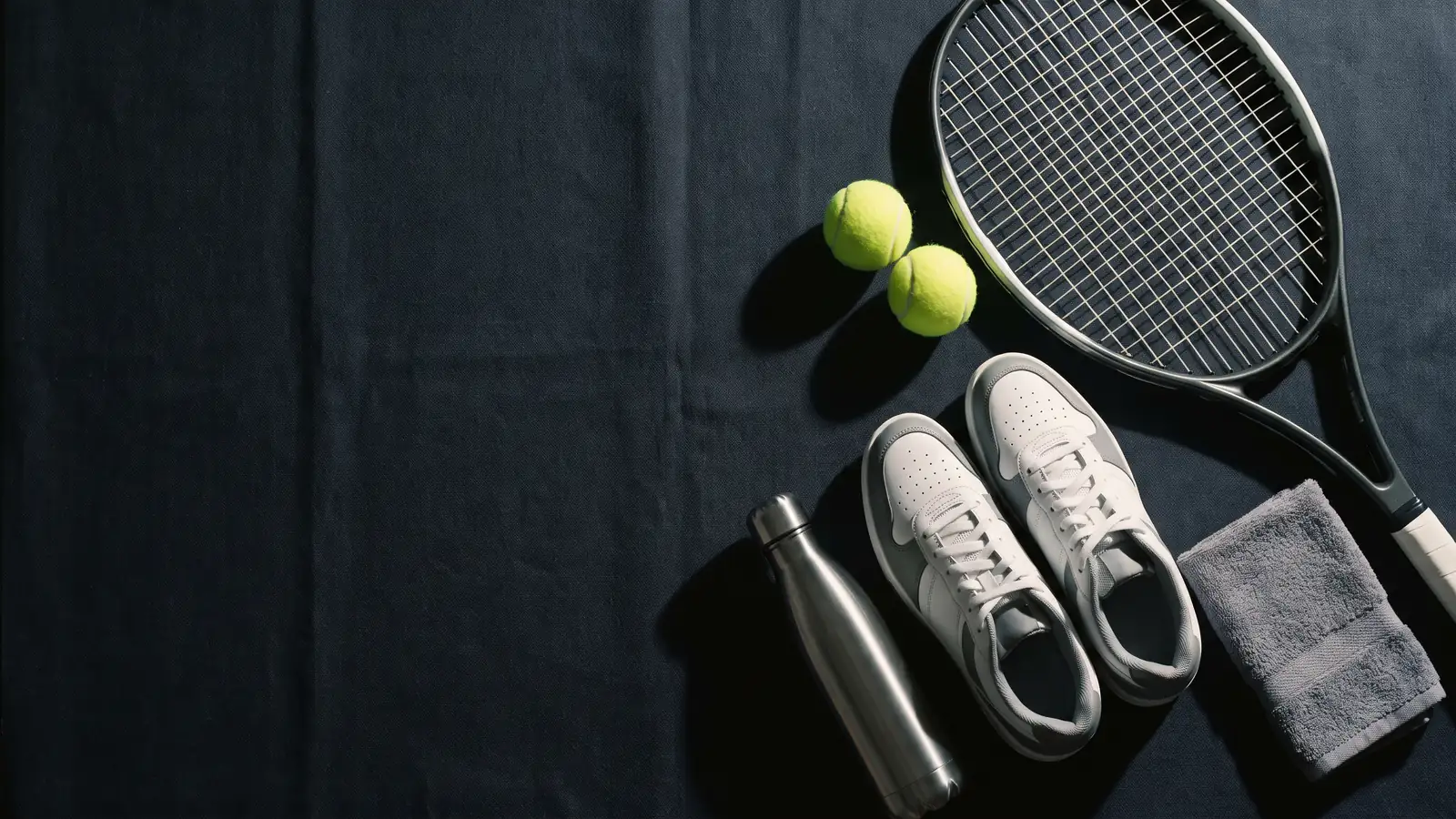
Court shoes, gym clothes and water. That is the whole list. Here is the longer answer, including the one item that genuinely matters and the several you should not buy yet.
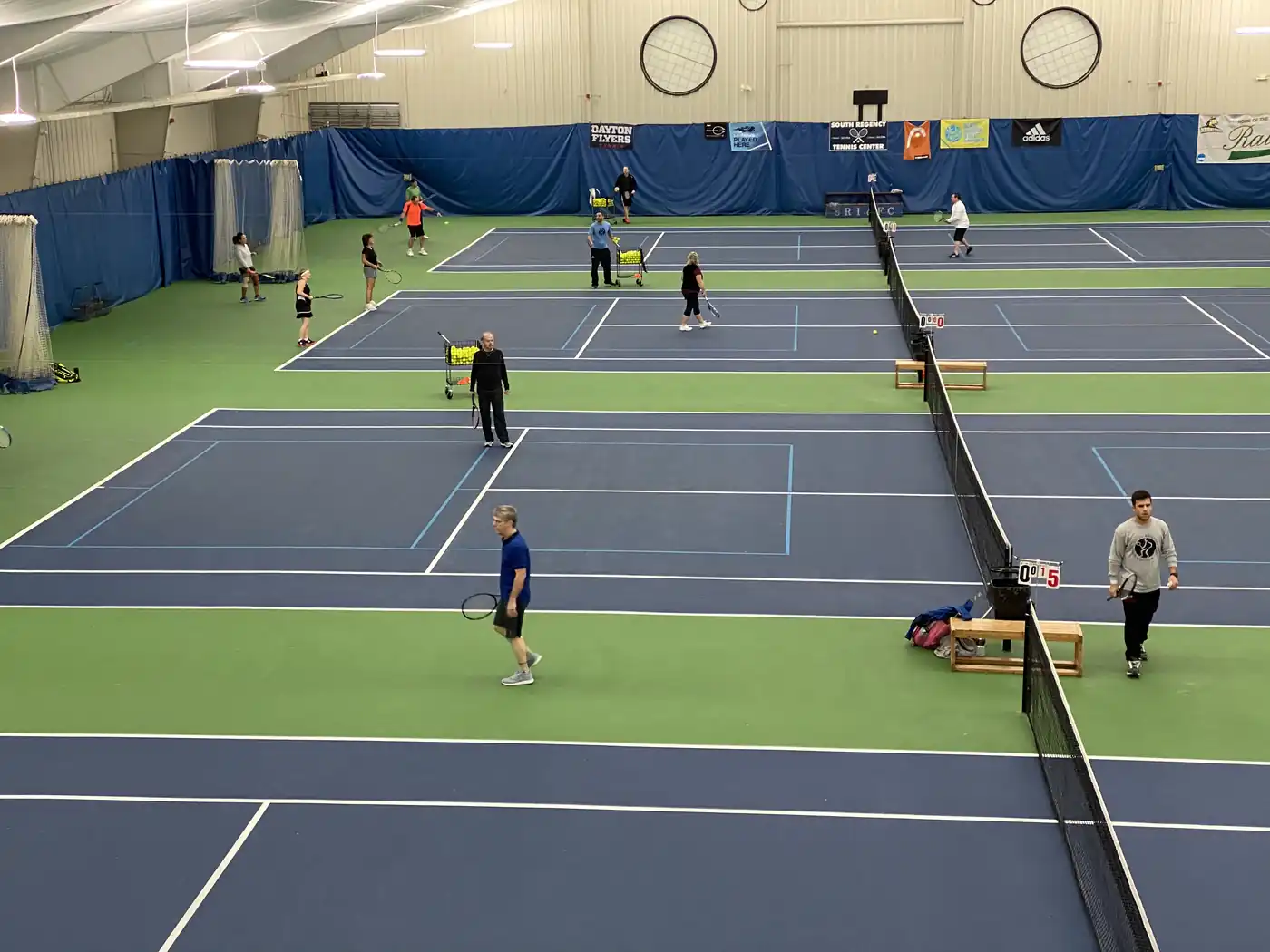
The numbers on every clinic schedule and league listing, translated into plain English. What each level looks like on court, how to work out yours, and why guessing low is the right move.