Three is not too young, and eleven is not too late. What matters far more than the starting age is the size of the ball, the size of the court, and whether anybody has made it feel like a test. A guide for parents, age by age.
I run Little Tennis and Futures here — the first two rungs of the ladder, and the ones that quietly decide whether a child stays with the sport at all. Which means most of my job is not teaching forehands. It is managing the gap between what parents expect and what actually develops a young player.
So let me start with the two things I most want parents to know, and then go age by age.
One: the goal before about age ten is not technique. It is that they want to come back next week. Everything else is downstream of that.
Two: children playing on adult courts with adult balls and adult racquets is the single biggest reason they quit. The ball bounces over their heads, the court is enormous, the racquet is too heavy to swing properly, and they conclude they are bad at tennis. They are not. They have been given the wrong equipment.
If you played as a child in the eighties or nineties, you were probably handed a yellow ball and a full court and told to get on with it. That approach has been almost entirely abandoned, and for good reason.
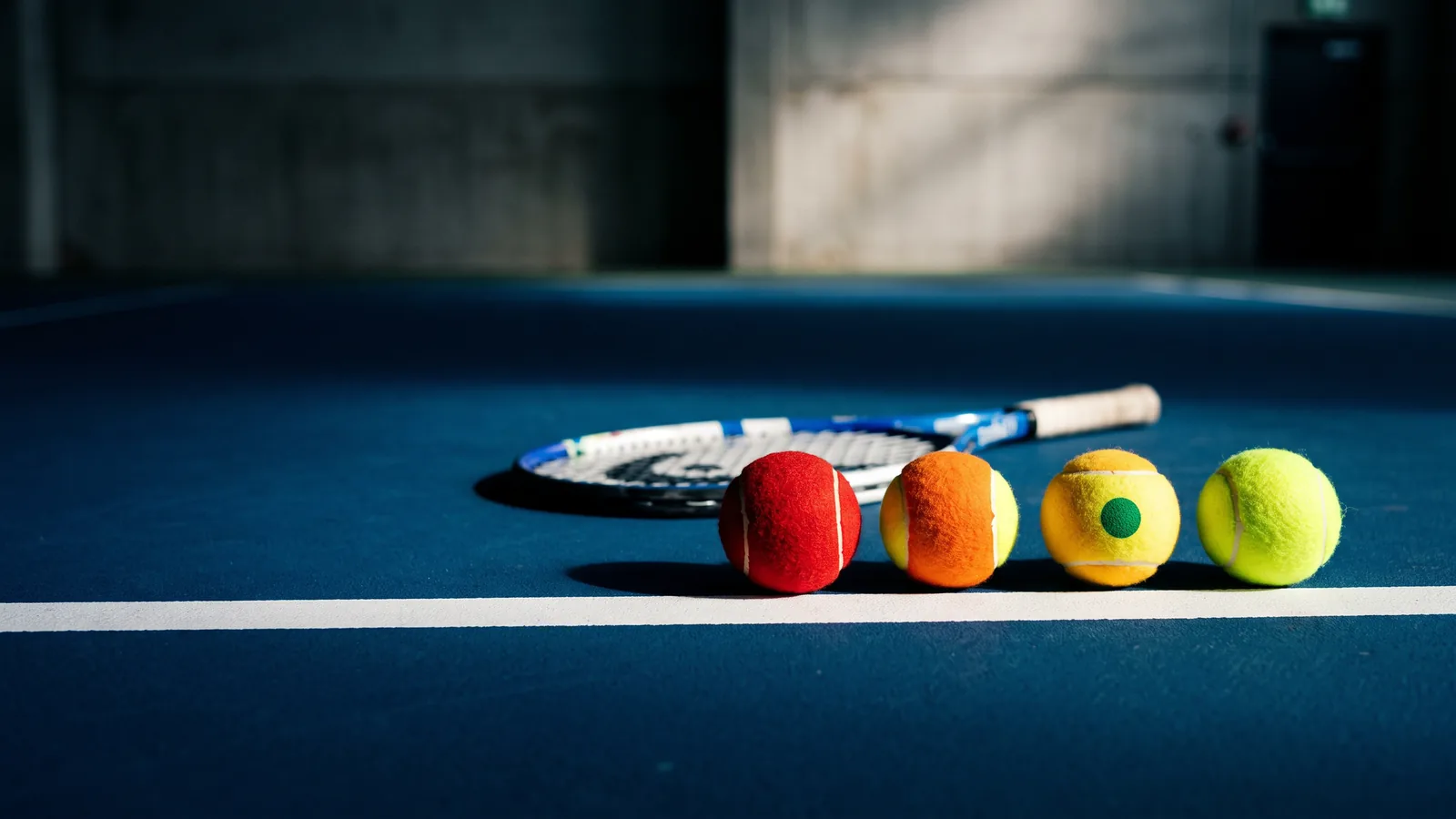
Modern junior tennis uses low-compression balls that bounce lower and travel slower, on smaller courts, with shorter racquets. The progression is standard worldwide:
| Stage | Ball | Bounce | Typical ages |
|---|---|---|---|
| Red | 75% slower than a yellow ball, foam or felt | Waist height on a small child | 3–7 |
| Orange | 50% slower | Chest height | 7–9 |
| Green | 25% slower | Near-normal | 9–11 |
| Yellow | Standard | Standard | 11+ |
The point is not to make it easy. The point is that a slower ball in a smaller space lets a child actually rally — and rallying is where every real tennis skill comes from. A seven-year-old with a red ball has proper rallies in week one. The same child with a yellow ball on a full court spends six months chasing.
Do not buy a full-size racquet for a child under about ten. It is the most common and most counterproductive purchase in junior tennis — too heavy to swing with any shape, and it builds a hitch that takes years to remove. Junior racquets are sized in inches by height. We supply age-appropriate racquets and the right balls at every tier, so there is nothing to buy before a first session.
And that is exactly right. At this age a good session is hand-eye coordination, balance, throwing, catching, changing direction, and a great deal of laughing. Some of it involves a racquet. Much of it does not.
What you should see: short courts, foam or red balls, small racquets, and games with rules a four-year-old can follow. What you should not see: a line of children waiting their turn, or anybody being corrected on their grip.
One or two sessions a week is plenty. The realistic goal is that they can track a moving ball, get their body behind it, and are pleased to be there.
Real strokes begin to appear here, but they emerge out of play rather than being installed by instruction. Children this age learn by doing something a hundred times in a game they are enjoying, not by being told how to do it correctly.
This is where you first see the difference between a child who has been allowed to develop a natural swing and one who has been over-coached into a stiff, careful, technically tidy stroke that will never generate power. The second is much more impressive to watch at seven and much worse at fourteen.
Twice a week is a good rhythm. Points start to matter to them somewhere around seven or eight, and that is the moment the sport becomes properly interesting.
Green ball, most of the court, proper technique work, and genuine match play. Children at this age can absorb technical instruction in a way a six-year-old cannot, and they start to enjoy competing rather than just playing.
This is also the first point at which a child might reasonably play three or four times a week — if, and only if, they are the one asking. Volume before enthusiasm produces burnout with impressive reliability.
Parents of twelve-year-olds ask whether they have missed the window. Almost always, no. Tennis rewards late starters far better than most sports, because coordination, strength and tactical understanding all arrive later and matter enormously. A twelve-year-old with athletic background from another sport can catch a lifelong player within two or three years.
What changes is the route. A late starter usually needs more sessions per week and benefits from group training with match play, rather than easing in gently.
This is the part of the article nobody asks for and everybody needs.
Sit far enough away that they cannot hear you. The hardest instruction any tennis parent receives, and the most valuable. A child looking at the fence between points has stopped playing tennis and started taking an exam.
Do not coach in the car. The drive home is for anything except a technical review. Ask what was fun. Ask who they played with. The famous six words used across junior sport — “I love watching you play” — are famous because they work.
Judge progress in months, not weeks. Skill acquisition in children is lumpy: nothing for six weeks, then everything at once. A child who looks stuck in October is very often transformed by December.
Let them play other sports. Early specialisation in a single sport is associated with higher injury rates and higher dropout, and it does not produce better players. Soccer, swimming and basketball all build things tennis needs.
Watch for the signals it is time to move up: boredom, coasting, seeking out older children to hit with, or asking to come more often. Those matter more than age or how long they have been in a tier.
We run a five-level junior programme, and coaches move players up when they are ready rather than when the calendar says so.
Future Grand Slammers runs through the summer for ages 3 to 11 alongside the regular programme.
Two of our own teaching pros came up through the Masters programme here as juniors and never left, which is the outcome we are actually aiming at.
Bring your child in, a pro hits with them for fifteen minutes, and you leave knowing which tier they belong in and what it costs. No obligation attached, and no sales pitch afterwards.
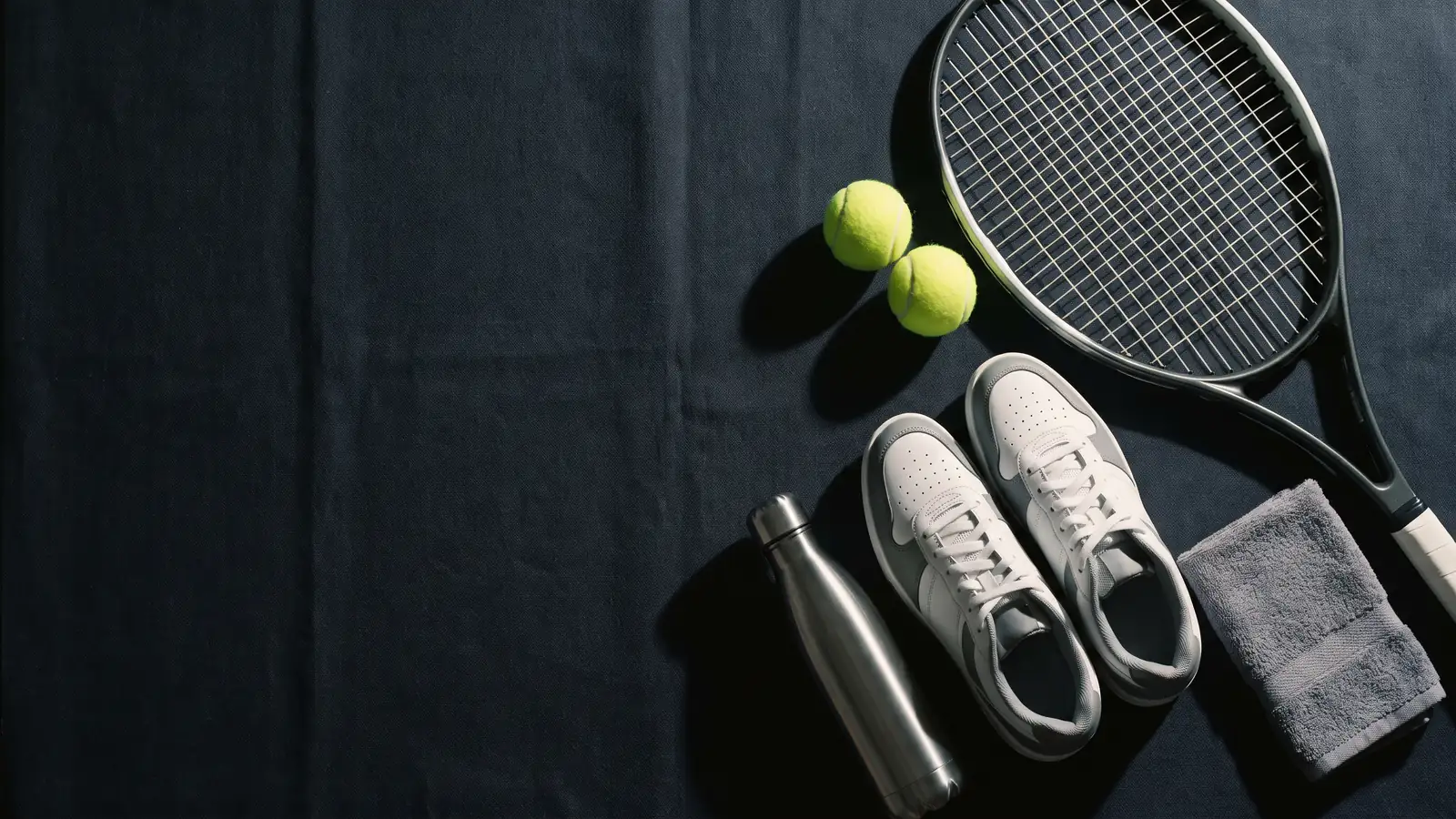
Court shoes, gym clothes and water. That is the whole list. Here is the longer answer, including the one item that genuinely matters and the several you should not buy yet.
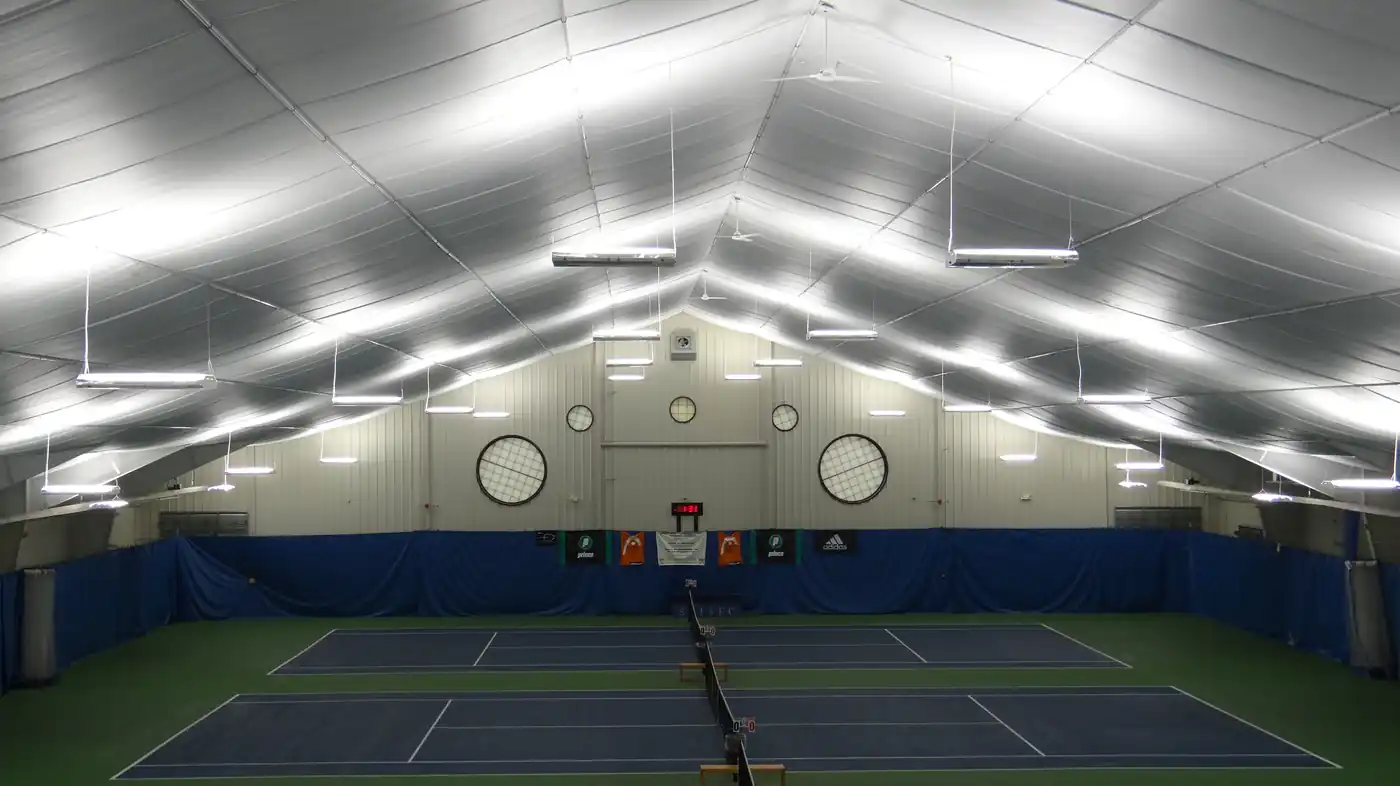
Ohio gives you five good months outdoors. Here is how to play the other seven, what indoor court time really costs, and what separates a club you stay at from one you quietly stop driving to.