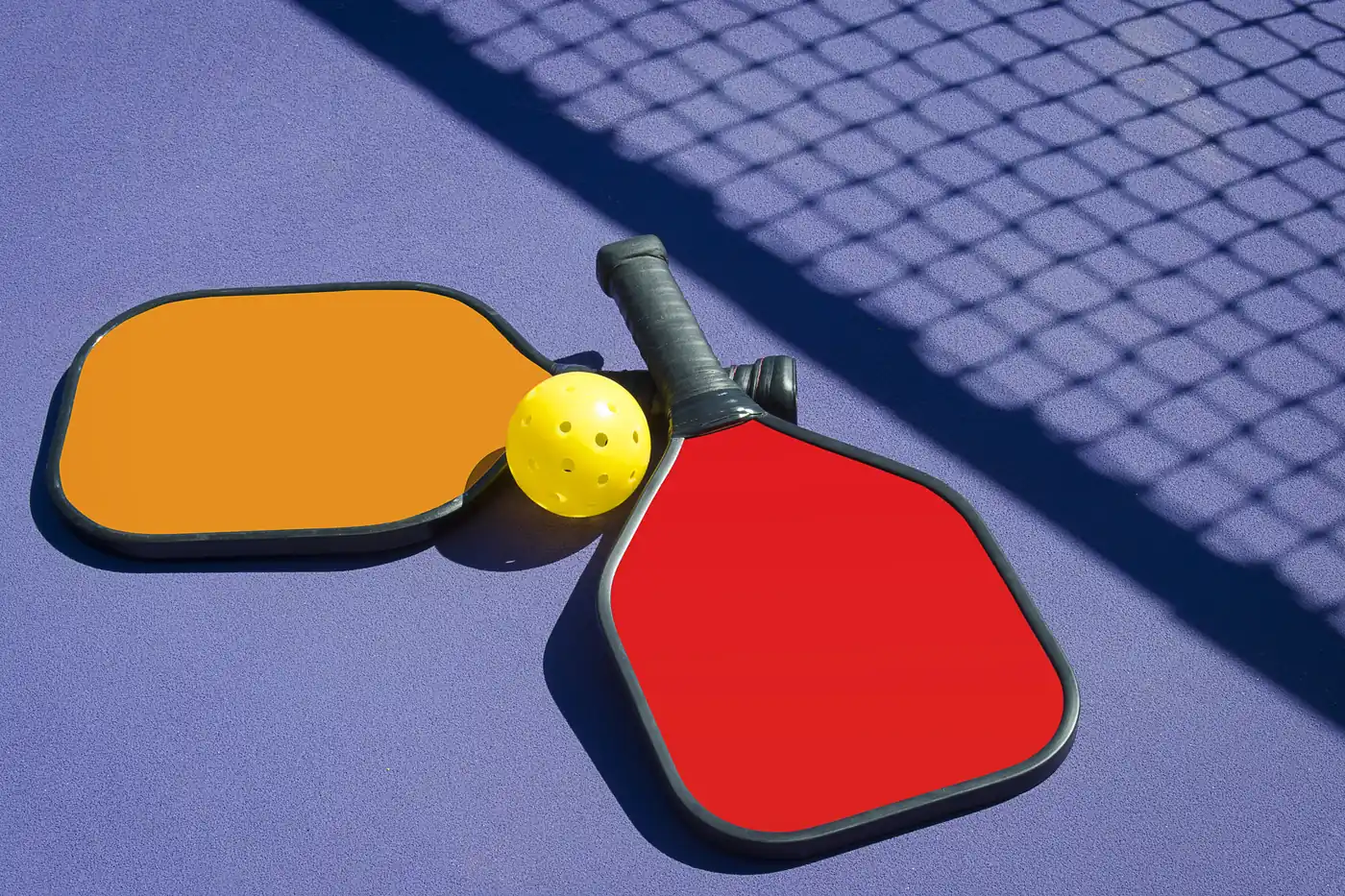
We run both sports under one roof, so we have no reason to sell you one over the other. Here is the honest comparison — how they differ physically, how long each takes to learn, what each costs, and which one you should probably start with.
I grew up on tennis in Banja Luka and played it through college in Louisville. I am also Pickleball Level 1 certified, and I teach both games here every week. That combination is rarer than it should be, and it means I have heard every version of this argument from both sides.
Tennis players tend to describe pickleball as tennis with the difficulty removed. Pickleball players tend to describe tennis as an exhausting sport with a barrier to entry and a snobbery problem. Both caricatures are lazy, and neither will help you pick.
So here is what actually separates them.
| Tennis | Pickleball | |
|---|---|---|
| Court size | 78 × 27 ft (singles) | 44 × 20 ft |
| Net height at centre | 36 in | 34 in |
| Racquet / paddle | ~11 oz, strung, ~27 in long | ~8 oz, solid, ~16 in long |
| Ball | Pressurised felt, lively | Perforated plastic, slow |
| Serve | Overhead, unlimited attempts at power | Underhand, below the waist |
| Scoring to | Games, sets, matches | 11 points, win by 2 |
| Typical game length | 60–120 min for a match | 15–25 min for a game |
The number that explains almost everything else is the court. A pickleball court is roughly a third of the area of a tennis court. That single fact drives the learning curve, the physical demand, the social structure and the injury profile of each sport.
Let me be direct, because this is the question underneath most of the others.
Pickleball is genuinely easier to start. Not marketing-easier — actually easier. The ball is slow, the court is small, the paddle is short and light so it is far simpler to control, and the underhand serve means you can start a point on day one. Most people are playing recognisable, enjoyable games within a single session. In tennis, the equivalent milestone takes several weeks.
Tennis has a much higher ceiling. The skills go deeper — topspin, slice, a kick serve, genuine court coverage, the tactical richness of having space to construct a point. A 3.5 tennis player has spent years accumulating things a beginner cannot even see. Pickleball has real depth too, especially in the soft game at the kitchen line, but it arrives sooner and the gap between a good club player and a beginner is smaller.
The practical version: pickleball gives you fun on day one; tennis gives you thirty years of things to work on. Which of those you want is a personality question, not a fitness question.
Tennis players do not automatically become good pickleball players. The wrist is different, the paddle is short, and the biggest single fault we see is tennis players hitting far too hard into the kitchen. Equally, pickleball players moving to tennis find the longer racquet and the topspin genuinely difficult. Neither sport is a shortcut into the other.
The common claim is that pickleball is the low-impact option. That is broadly true and slightly misleading.
Tennis asks more of you aerobically. More ground to cover, longer points, more sprinting and stopping. A competitive singles match is a genuinely demanding hour. Doubles is considerably gentler, which is why most adult club tennis is doubles.
Pickleball concentrates the load differently. Less running, but a great deal of quick lateral movement in a small space, frequent reaching, and a lot of play at the net where reactions matter more than endurance. The injuries we see most in pickleball are not cardiovascular — they are Achilles, calf and lower back, usually from a sudden backward step for an overhead. That backward step is the most dangerous movement in the sport, and it accounts for a strikingly large share of serious pickleball injuries nationally.
If you have knee or hip issues, pickleball is generally kinder. If you have Achilles or calf history, do not assume pickleball is automatically the safe option — warm up properly and learn to turn and run rather than backpedal.
This is where the two sports diverge most, and it gets discussed least.
Pickleball is structurally social. Games are short, so paddles come on and off the court constantly. Open play sessions rotate strangers through games all evening. You will talk to a dozen people in two hours. There is essentially no arranging involved — you turn up and play.
Tennis is structurally committed. A match is an hour or two with the same three people, planned in advance. The relationships tend to be fewer and deeper — a doubles partnership can last a decade. League play gives you a team and a season.
Neither is better. But if what you want is to walk into a room where nobody knows you and be playing with people inside five minutes, pickleball does that more reliably. If what you want is a standing Tuesday game with people who become genuine friends, tennis does that more reliably.
Pickleball is cheaper to start and roughly comparable once you are playing regularly indoors.
A decent starter paddle is around $60–$100; a decent starter racquet is $80–$150 plus restringing a couple of times a year. Balls are cheap in both. The real cost in this climate is indoor court time, and there the difference narrows — you are heating the same building either way, though a pickleball court holds four players in a third of the space, so the per-person cost tends to be lower.
Both need proper court shoes. Running shoes are wrong for both sports and for the same reason: they are built to roll forward and give almost nothing laterally.
Start with pickleball if: you want to be playing games this week rather than next month; you are coming back from injury or managing joints; you want the social side immediately; you are over about 60 and new to racquet sports; or you want something you and a partner of very different athletic ability can genuinely play together.
Start with tennis if: you want a sport with a long ceiling to climb; you played as a kid and want it back; you like the idea of a team and a season; you have children who might play, since junior tennis pathways and school teams are far more developed; or you simply find the game itself more beautiful, which is a completely legitimate reason.
Or do what a growing number of our members do and play both. They complement each other better than the tribalism suggests. Pickleball sharpens hands, reactions and touch at the net. Tennis builds the movement, the fitness base and the stroke mechanics. Several of our members play tennis twice a week and pickleball once, and the pickleball is the session they use to stay sharp when they are tired.
South Regency runs eight indoor tennis courts and six indoor pickleball courts on a true hard-court surface, with consistent lighting and climate control. No wind, no glare, no rain delays, and no offseason for either sport.
Pickleball open play runs several times a week. The times move around the tennis schedule, so it is worth a quick call before you drive over. If you have never held a paddle, there are spares at the desk and somebody will show you where to stand — which, in pickleball, is genuinely most of the battle.
Paddles and racquets are both lent at the desk. Call to check this week’s open play times, or drop into a coed all-levels tennis clinic — Tuesday and Thursday lunchtimes, or Saturday morning.
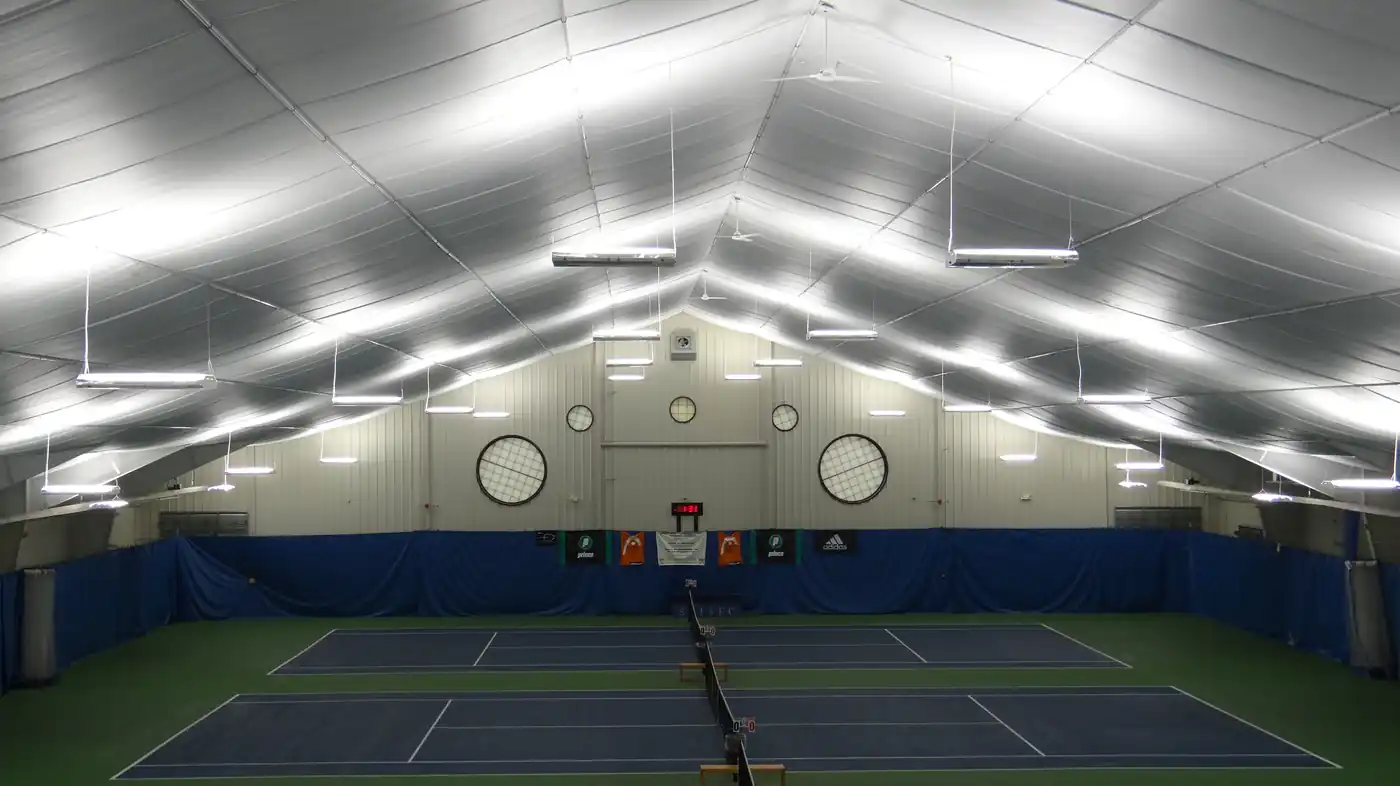
Ohio gives you five good months outdoors. Here is how to play the other seven, what indoor court time really costs, and what separates a club you stay at from one you quietly stop driving to.
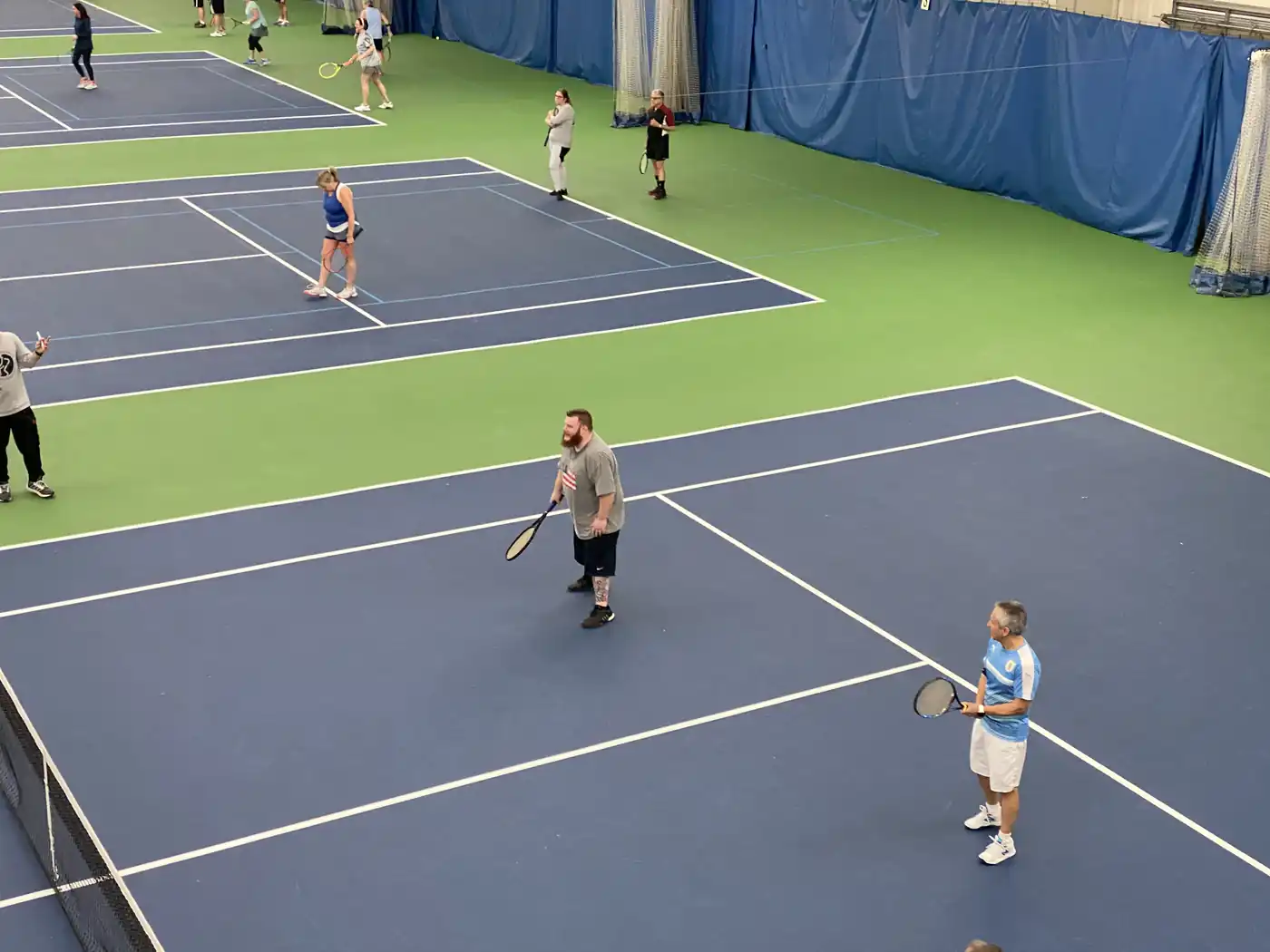
No partner, no racquet, no need to get fit first. What actually happens when an adult who has never played walks into a beginner clinic, and what the first six weeks really look like.