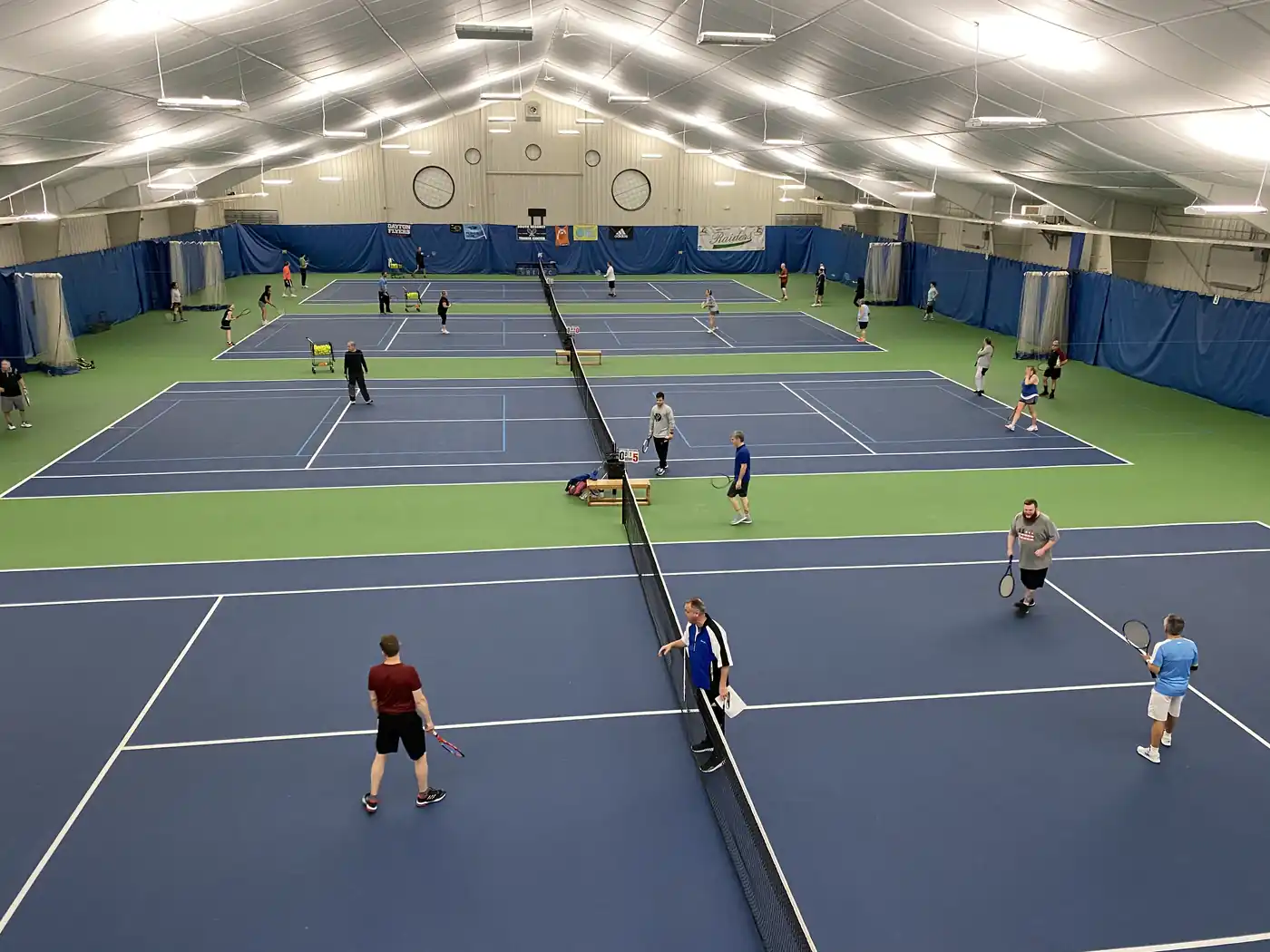
Every spring, an Atlantic 10 program plays its home season on our courts. Here is how that came about, what a college dual match actually looks like, and why you should bring your kid to watch one — it costs nothing.
If you drive out to West Tech Road on a Saturday in February, the car park will be fuller than you expect and there will be a scoreboard at the end of the courts. Somewhere in the building there will be a coach with a clipboard and a squad in Dayton red, and eight matches will be going at once.
The University of Dayton men’s and women’s tennis teams play their home matches here. Both squads are listed with South Regency Tennis Center as their home venue on the Flyers’ published schedules, and have been for years. Between the two programmes that is usually somewhere around nine or ten home dates each across a spring season, with the occasional match staged at the Lindner Family Tennis Center over in Mason.
Members walk past it. Most of the Miami Valley does not know it happens at all. Which is a shame, because free Division I sport twenty minutes from downtown Dayton is not a common thing.
Plenty of Division I tennis programmes do not own a facility. Building six to eight competition courts with the run-off space, seating and lighting a dual match needs is an enormous capital project for a sport that does not fill an arena, so a great many programmes rent, partner or share.
In Ohio there is a second problem, and it is the one that decides everything: the college tennis season runs January through April. That is the exact stretch when this state is least playable outdoors. A programme with only outdoor courts spends its whole season either travelling or praying, and neither builds a team.
So an indoor facility with enough courts to run a full dual match simultaneously is not a luxury for a college programme here. It is the requirement. Eight indoor courts under one roof, climate controlled, with consistent lighting, is what makes a home season possible at all.
South Regency is not owned by or affiliated with the University of Dayton, and hosting the Flyers does not close the building to anybody. Member play, clinics and junior programmes carry on around match days. If a match is on, the desk will tell you which courts are tied up when you book.
If you have only ever watched tennis on television, a college dual match is a genuinely different animal, and the format catches people out. Here is how it works.
| Stage | What happens | Worth |
|---|---|---|
| Doubles | Three doubles matches at once, one six-game set each. Win two of the three and your team takes the doubles point. | 1 point |
| Singles | Six singles matches, best of three sets, played simultaneously across the courts. | 1 point each |
| Result | First team to four points wins the match. Remaining matches are often stopped once the result is decided. | Best of 7 |
Two things follow from that, and both make it far better to watch in person than on a screen.
Everything happens at once. You are not watching one match, you are watching six, and you choose where to stand. The atmosphere is closer to a swim meet than to Wimbledon.
It is loud. College tennis is the one place in the sport where cheering between points is not just tolerated but expected. Teammates on the sidelines are vocal for the whole match. If your only experience of tennis etiquette is polite applause and silence on serve, the first ten minutes will surprise you.
Home matches are free and open to the public. There is no ticket and no need to be a member.
And if you cannot get there: every indoor court here is a PlaySight SmartCourt, so matches played on them are recorded and streamed automatically. That is the same system our members use to send a league match to family two states away.
This is the part I would push hardest.
Junior players spend a lot of time being told what a good ball looks like. Very few of them have ever stood six feet from one. A 4.0 club player is a strong tennis player; a Division I player is doing something categorically different with the ball, and the difference is not visible on a screen. It is visible from the side of the court, in the sound.
What juniors tend to notice, once they have watched for twenty minutes:
Several of our own Masters players have gone on to play college tennis, and two of the coaches on our staff came up through this club’s junior programme. The path from a Saturday morning clinic to a college roster is not abstract here. It runs through the same eight courts.
The same eight indoor courts are open for member bookings, drop-in clinics and lessons all year. If you want to see the place first, turn up and someone will walk you round.
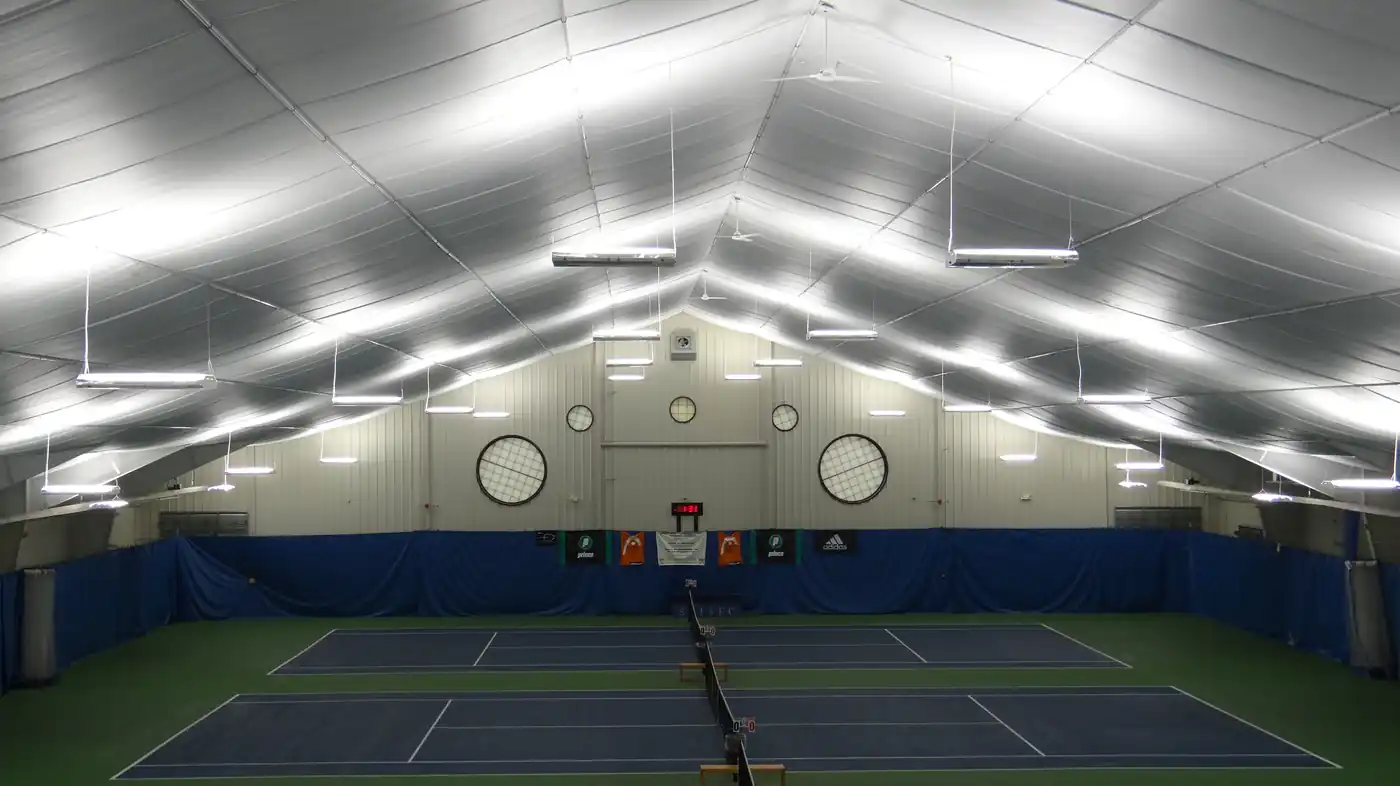
Ohio gives you five good months outdoors. Here is how to play the other seven, what indoor court time really costs, and what separates a club you stay at from one you quietly stop driving to.
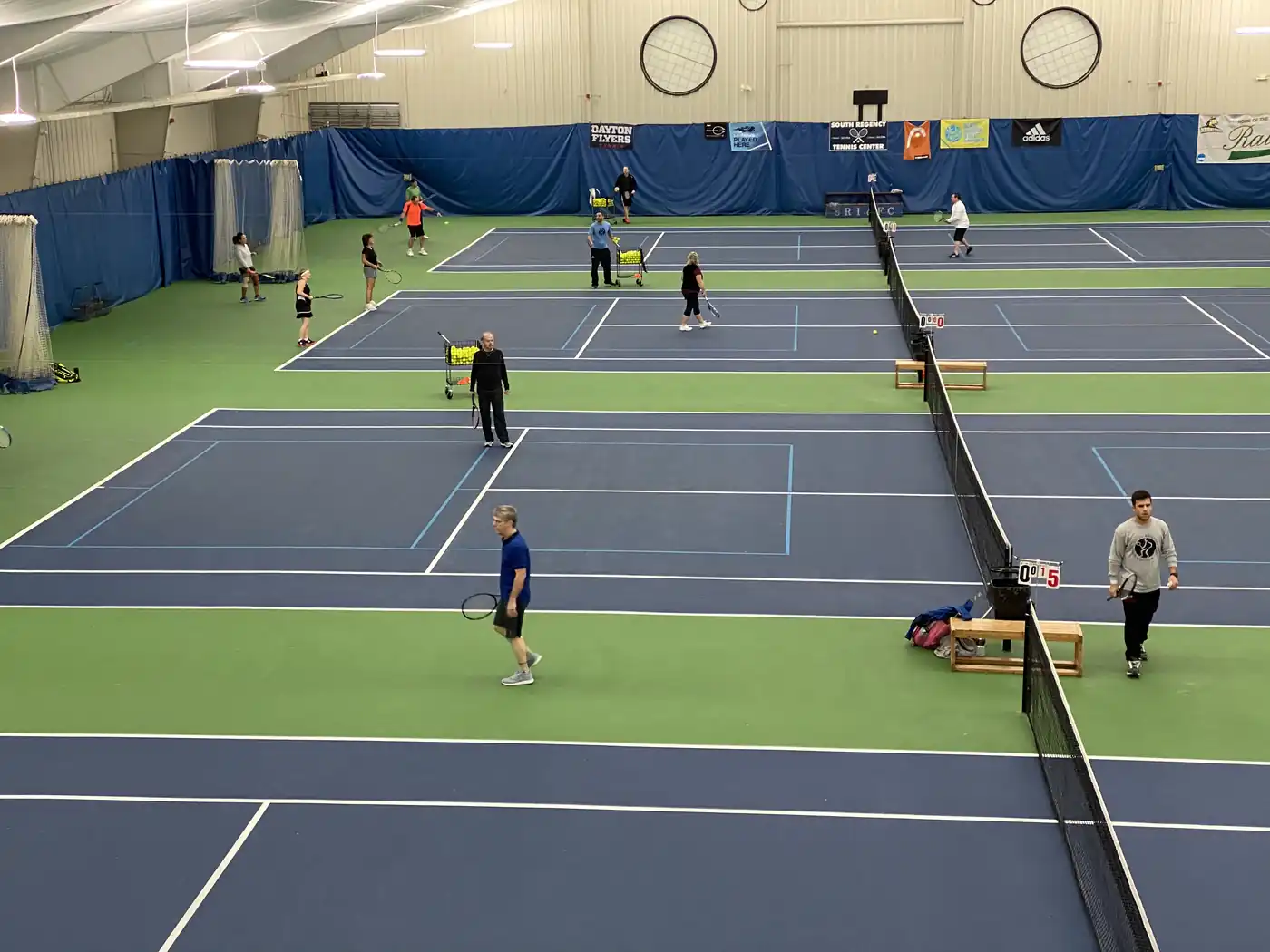
The numbers on every clinic schedule and league listing, translated into plain English. What each level looks like on court, how to work out yours, and why guessing low is the right move.